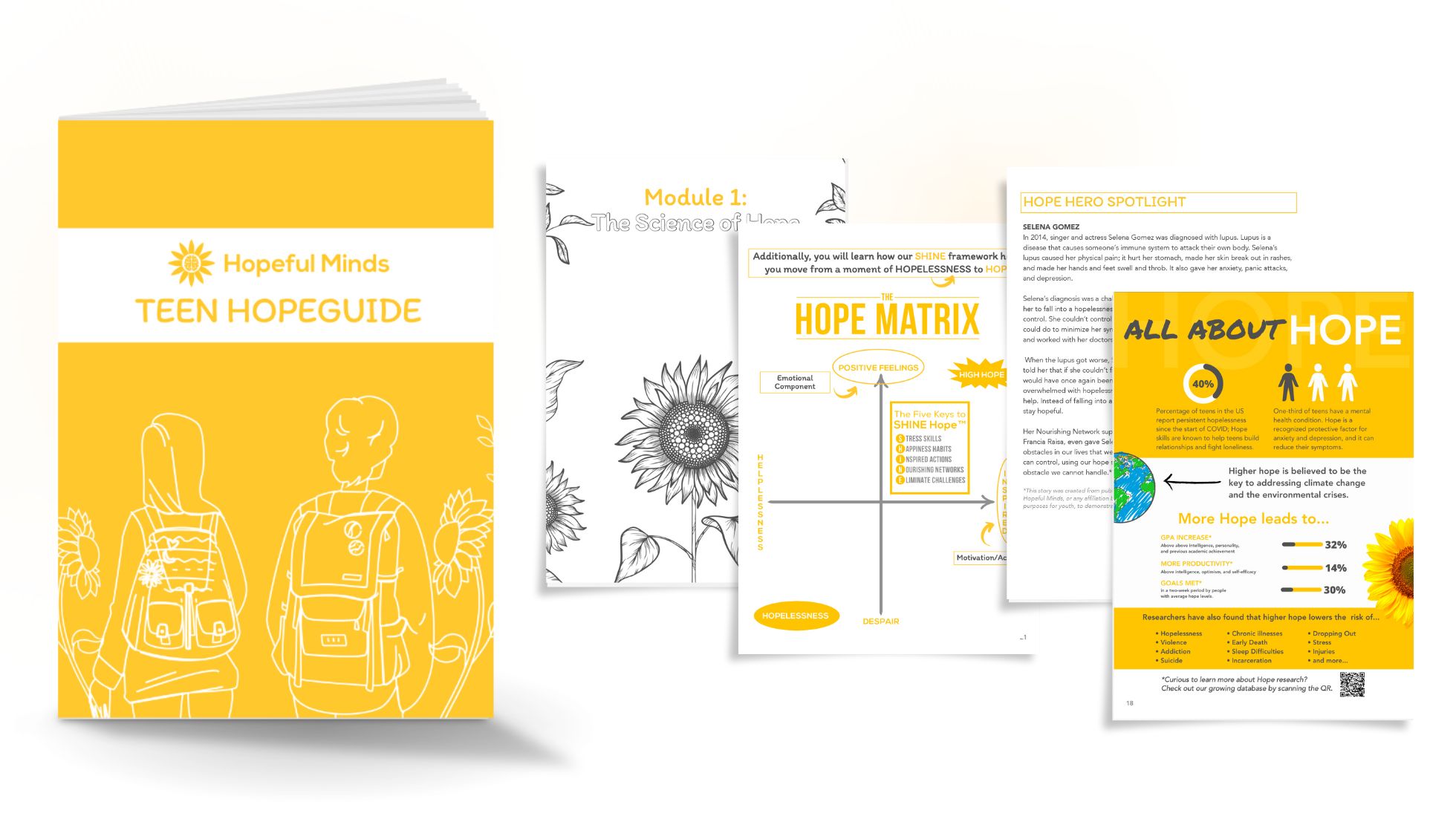
Big News: Hope is Blooming in Chicago
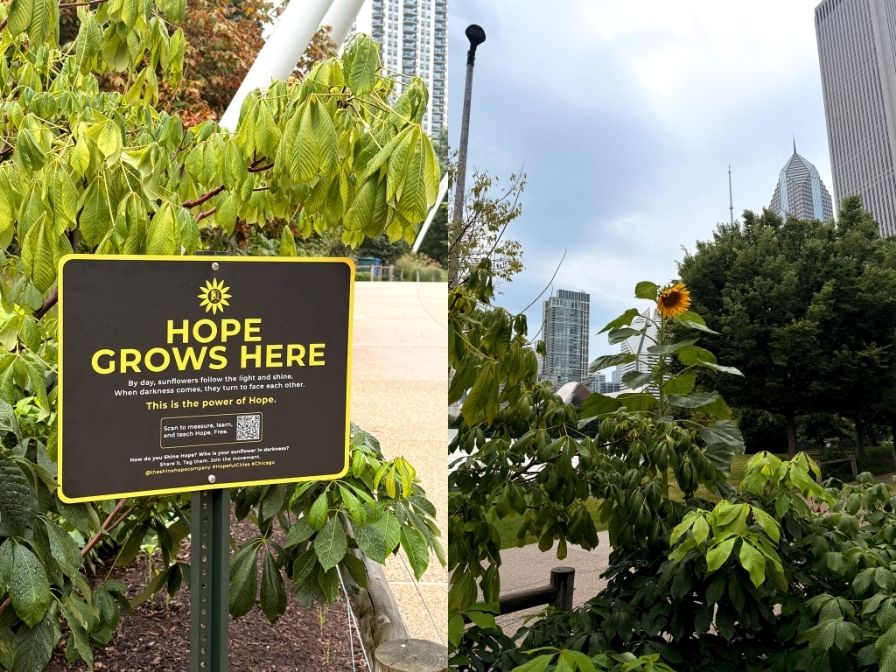
Chicago residents can visit HOPE GROWS HERE, scan the sign to access free resources to measure, learn and teach Hope, or become an Ambassador and help make the “how” to Hope available across Chicago.
If you care about violence, suicide, addiction, self-harm, depression, anxiety or loneliness, we need you. Hope is measurable. Hope is teachable. Instead of waiting until a crisis, we can move further upstream and equip people with the skills of Hope.
It Isn’t Just 1 in 5. It’s 5 in 5.
Our mental health system must identify, treat and support people who need care. Hopeful Cities complements that work by equipping the 5 in 5 with skills and tools before crisis.
Hope is the belief that the future can be better than today and that I/we have the power to make it so.
Hopeful Cities brings Hope programming across ages and populations into a common language and common framework through the Hope Matrix and SHINE Hope, helping people understand what a moment of Hopelessness can look like and learn practical skills for moving toward Hope.
This is bigger than mental health alone. It matters for violence prevention, addiction, suicide and self-harm prevention, loneliness, schools, workplaces, families and healthier communities.
Children need these skills. Adults need them. We all do.
Rebecca O. Bagley, President and CEO of The Kennedy Forum, shares:
“Our goal is for 90% of people in the United States to receive screening, quality treatment, and recovery for mental health and addiction. Hopeful Cities helps every person play a role in achieving these goals, enabling communities to reach people before crisis, support them in times of need, and give them hope and healing for lasting well-being.”
Chicago: Become a Hopeful Cities Ambassador
In about 30 minutes, Chicago residents can watch the Ambassador training and learn about Hope and Hopelessness, the SHINE Hope framework, how Hope is measured, the Hope Matrix, the 90-90-90 framework, Hope in the workplace, and the programs and resources available to Chicago residents and their households.
After completing the training and assessment, Ambassadors receive a Hope lesson they can begin sharing with others.
This is not simply telling people to “have Hope.”
It is teaching the HOW.
And becoming an Ambassador is only the beginning. Organizations can encourage staff to become Ambassadors and then put those skills into action in workplaces, schools, after-school programs, recovery settings, community organizations, places of worship, families and neighborhoods.

Edward M. Barksdale, Jr., MD, Professor of Surgery & Pediatrics and Chief Surgical Officer of Chicagoland Health Alliance, captures the vision beautifully:
“As a pediatric surgeon, I have devoted my life to helping children survive and have learned that healing also means helping them see a future worth living for. Hope grows when people know they matter, feel they belong, and have the tools and opportunities to move forward.”
“This initiative gives Chicagoans a powerful way to care for one another. When we join together to place Hope in one another’s hands, we do more than change individual lives; we build a legacy of healing, belonging, and possibility that can endure for generations.”
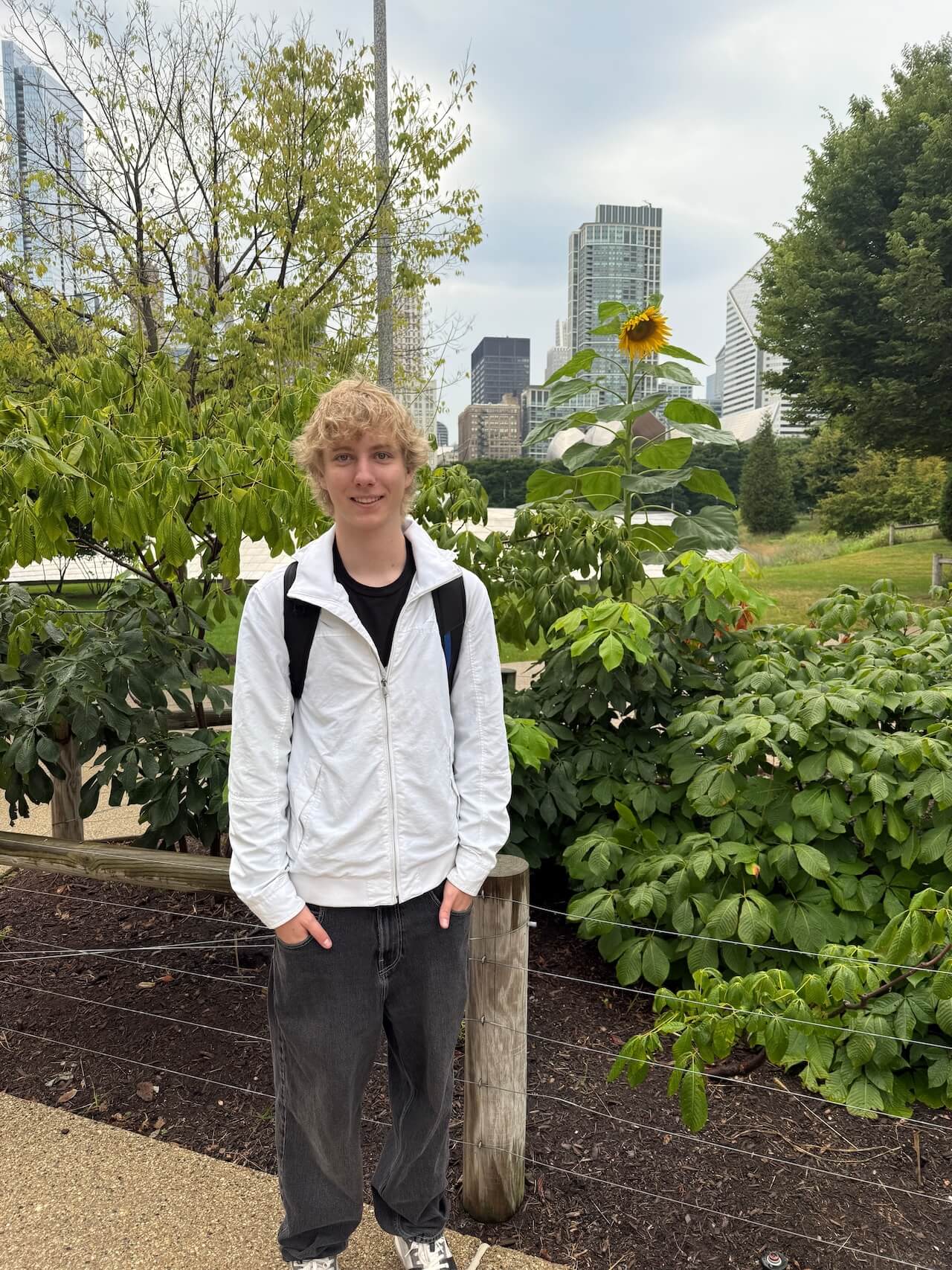
“I’ve experienced profound loss and trauma at a young age, and I know how deeply those experiences can affect your Hope. Learning that Hope is something I can actually build gave me tools I wish every young person had. We can’t always control what happens to us, but we can learn skills that help us find a way forward.” – Julian Miravalli, Hopeful Cities Ambassador
Hope Grows Here
Sunflowers are the international symbol of Hope, and the sunflower at Maggie Daley Park is now blooming.
Getting it there became a lesson in Hope itself.
Hopeful Cities Ambassador Chuck Wood and Jeff Blumenthal, Park Manager at Maggie Daley Park, kept the project moving through challenge after challenge. The location changed. Water was a challenge. There were multiple plantings. The sign took work.
They adapted, worked together and kept moving toward the vision.
And at the end of the summer, the sunflower bloomed.
The HOPE GROWS HERE sign shares another important lesson:
By day, sunflowers follow the light and shine. When darkness comes, they turn to face each other. This is the power of Hope.
When life gets dark, we turn toward one another.
The sign also connects visitors to free resources to measure, learn and teach Hope.
If you are in Chicago, go see the sunflower while it is blooming. Take a photo. Scan the sign. Learn the “how” to Hope. Think about who turns toward you when life gets dark, and how you can turn toward someone else.
Share how you Shine Hope.
We Need Everyone
Chicago residents: Become Ambassadors.
Organizations and companies: Get your people trained and put Hope into action.
Foundations: Sponsor access.
Cities and counties: Make the “how” to Hope available to your residents.
Imagine a city where schools, workplaces, healthcare organizations, nonprofits, recovery organizations, faith communities and residents all share a common language and framework for Hope; where people know how to measure it, practice skills to build it, teach those skills to others and connect people with additional support when they need it.
That is the whole-community approach of Hopeful Cities.
Chicago is showing what is possible.
Want to bring or sponsor Hopeful Cities in your community? Email activate@theshinehopecompany.com.
Hope is blooming in Chicago.
Let’s Shine Hope. Together.
Measure Hope. Teach Hope. Activate Hope.
Keep Shining Hope,
Kathryn
Kathryn Goetzke, MBA
CEO & Chief Hope Officer, The Shine Hope Company
Author of The Biggest Little Book About Hope
Founder of International Foundation for Research and Education on Hope (iFred)
Creator of Hopeful Cities, and Hopeful Minds
Creator of Hopeful Mindsets Overview, Hopeful Mindsets in the Workplace Overview, and Hopeful Mindsets on the College Campus Course
Podcast host of The Hope Matrix
Chief Mood Officer, The Mood Factory (taking a break, for hope!)